Representing the best
Finnish authors abroad
Finnish authors abroad
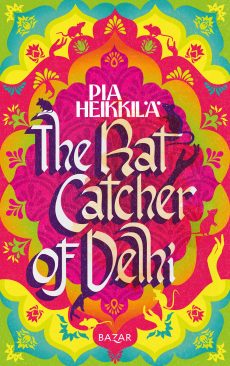
“I am Zua-Zuha-Tsuua! Call me whatever you like. I’m Delhi’s most sought-after rat catcher — and business is booming. This is a city made for rats!”
Zoya was born with three fingers on one hand and two on the other. What might seem like a disadvantage has given her extraordinary reflexes and an unusual livelihood. She is Delhi’s most sought-after rat catcher.
On the streets, Zoya dresses as a boy. Partly, it keeps her safe; partly, she has never been sure who she really is. As a boy, she discovers a freedom and independence she has never experienced before.
But when one of her closest friends is brutally mutilated, Zoya is drawn into a world of exploitation and violence that has always existed around her, but whose rules she has never understood. Her fight to survive becomes a search for justice, as she begins to uncover the hidden machinery of a city where vulnerable children are routinely exploited and abused.
Told entirely in Zoya’s sharp, irreverent and unsparing voice, The Rat Catcher of Delhi is a dark yet ultimately hopeful novel about survival, identity, violence and the search for justice in contemporary Delhi. It will appeal to readers of Vikas Swarup’s Q & A and Aravind Adiga’s The White Tiger.
Finnish journalist, novelist and podcaster Pia Heikkilä has lived and worked in India for more than sixteen years. Based in Delhi, she draws on her long experience of the city to create a vivid and unsettling portrait of a place where poverty, danger and resilience exist side by side.
The title was published in Finnish translation by Bazar in 2026 and has received excellent reviews.
World English rights are available.
English manuscript
English synopsis
Finnish language edition
‘The magnificent portrayal of Indian society by Pia Heikkilä, who writes in English and lives in India, doesn’t leave you unmoved. Yes, this is the kind of cruelty that greed and exploitation can produce. I hope that fighters like Zoya really do exist.’ –Niina Mälkiä, ET magazine
‘…the book offers an eye-opening glimpse into the lives of the poor in an Indian city of millions, where joys are rare, but not nonexistent..’ –Joonas Riekkola, Hämeen Sanomat newspaper