Representing the best
Finnish authors abroad
Finnish authors abroad
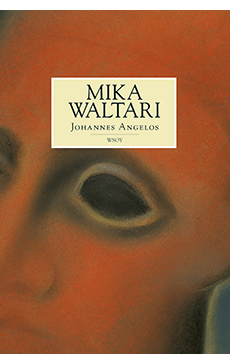
In The Dark Angel, a love story becomes both a symbol and a living embodiment of the city’s heroic resistance as the Eastern Roman Empire faces its impending fall.
The story opens in 1452, as Johannes Angelos arrives in Constantinople. A man of letters, a mystic, and an adventurer, his life has been a restless journey—from the Palace of the Popes in Avignon to the Council of Basel, from the splendor of Florence to the last crusade, and even to a place of honor at the court of Mehmed II. Yet, answering the call of destiny and driven by the secret of his origins, Johannes Angelos renounces everything to stand in defense of Byzantium against the advancing Turks.
Writing in the form of a diary, Johannes Angelos bears witness to both the epic siege and the despair of people watching their thousand-year-old walls crumble. He chronicles the agony of an empire torn apart by power struggles between Greeks and Latins, and the steadfast courage of Emperor Constantine XI against the Sultan’s Machiavellian cunning. Prepared to meet a certain death, Angelos is astonished to discover love in the arms of Anna Notaras—the untouchable daughter of the feared Grand Duke. Their passion is as tempestuous as the battle raging on the ramparts, and as impossible as the survival of Rome itself.
Written in the aftermath of World War II, The Dark Angel is a sweeping epic that captures the twilight of an era. Evoking the faith, ideals, and universal values of an antiquity that once reconciled East and West, Johannes Angelos stands at the threshold of a new age—one where matter triumphs over spirit, economic law eclipses moral law, and the age of God gives way to the age of man.
A prequel to The Dark Angel called Young Johannes was published posthumously in 1981.
Mika Waltari (1908-1979) is the most popular 20th century Finnish writer who is best known for his magnus opus The Egyptian. Over a career that spanned five decades, Waltari published well over 100 works, of which hundreds of translations have been made. His works include at least 30 novels, 20 plays and 15 novellas, as well as short stories, poems, screenplays and essays. In 1957 he was appointed to the Academy of Finland, having previously won the state literature award five times. Waltari’s works have been translated into over 40 languages.
Young Johannes, 1981
The Dark Angel, 1952
Bulgarian (Knizen tigr 1993)
Croatian (Kersovani 1957 / A3DATA 1996)
Czech (Cesky klub 2012; Vysehrad 2021); Czech audio (OneHotBook 2017, 2025)
Danish (Vilhelm Prior 1953)
Dutch (Van Holkema & Warendorf 1954)
English (G.P. Putnam’s 1952)
Estonian (Orto 1955; Sinisukk 1995; Varrak 2025)
Farsi (Intishārāt-i Zarrīn 1984 / Almı̄ 1995)
French (Presses 1984 / Phébus 1989, Libretto 2024)
Hebrew (Zohar 1953)
Hungarian (Európa 1996, Barrus 2006)
German (Kübler 2012, 2020, 2025)
Greek (Kaktos 1982; Kalendis 2002, 2025)
Italian (Garzanti 1954; Iperborea 2013)
Latvian (Dzintars 1954)
Lithuanian (Tyto Alba 1989, 2020)
Norwegian (Aschehoug 1953)
Polish (Iskry 1988; Książnica 1994)
Portuguese, Brazilian (Merito 1958)
Romanian (Polirom 2008, 2019, 2024)
Serbian (A3DATA 1996)
Slovak (Slovensky spisovatel 1988)
Slovenian (Obzorja 1978)
Spanish (Edhasa 1994, 2016)
Swedish (Wahlström & Widstrand 1953)
Turkish (Hamle Matbaasi, Cep Kitaplari 2000), rights reverted
“A rare gem. A turbulent and superb novel by a classic of world literature.” – The New York Times
“The events John Angelos is recording are those of the siege and capture of Constantinople by the Osmanli Sultan, Mohammed II. The time span is from 12 December 1452 – 30 May 1453. Packed into this period of less than six months are some of the most dramatic and historically significant events of medieval Christendom. Mr. Waltari, as a novelist, knows how to wring out of them, with embellishments, every ounce of human drama.” – Edmund Fuller, The Saturday Review
“…a vivid account of an apocalyptic event.” – Historical novels blog